Mallig, officially the Municipality of Mallig (Ilocano: Ili ti Mallig; Tagalog: Bayan ng Mallig), is a landlocked municipality in the province of Isabela, Philippines. According to the 2020 census, it has a population of 32,208 people. The municipality was named after the Mallig River that runs through it.
History
The area was first mentioned by Fray Pedro de Santo Tomas as the area to which the Irraya/Gaddang fled after the revolt of Dayag and Catabay in 1621 in what is now Ilagan City.
In 1939, then President Manuel L. Quezon declared the westernmost part of the province as a resettlement area, historically known as the Mallig Plains Resettlement Area. From then on, the influx of settlers from the Central Plains and the Ilocos Region encouraged more other settlers to migrate westward in these Kalinga-dominated plains.
Mallig was created by virtue of Republic Act No. 678 authored in 1952 by then Congressman Samuel F. Reyes. The act was approved on April 8, 1952, with the former barrio of Olango as the seat of government. The territory comprising Mallig was taken from several neighboring towns:
- from Roxas: barangay of Holy Friday, San Jose (East), and San Jose (West)
- from Ilagan: barangay of Casili, Olango Primero, Olango Segundo, San Jose Nuevo, and Manano
- from Tumauini: barangay of Barucbuc, Siempre Viva Norte, Siempre Viva Sur Bimmonton, Pasurgong, Manga, and Settlement No. 1
- from Santo Tomas: barangay of Abut and Minagbag
Mallig was a harsh abode for the migrants at the beginning, particularly because of the hostile natives who dominated the area, and also because of the occurrence of endemic malaria. It took the settlers gradual adaptation and acclimatization before they finally convinced their relatives and other migrants to settle permanently.
Geography
Mallig is bounded by the towns of Paracelis on its western limits, Quezon on its northern limits, Roxas on its southern limits and by both Delfin Albano and Quirino on its eastern limits. The municipality has a land area of 133.40 square kilometers or 51.51 square miles which constitutes 1.07% of Isabela's total area.
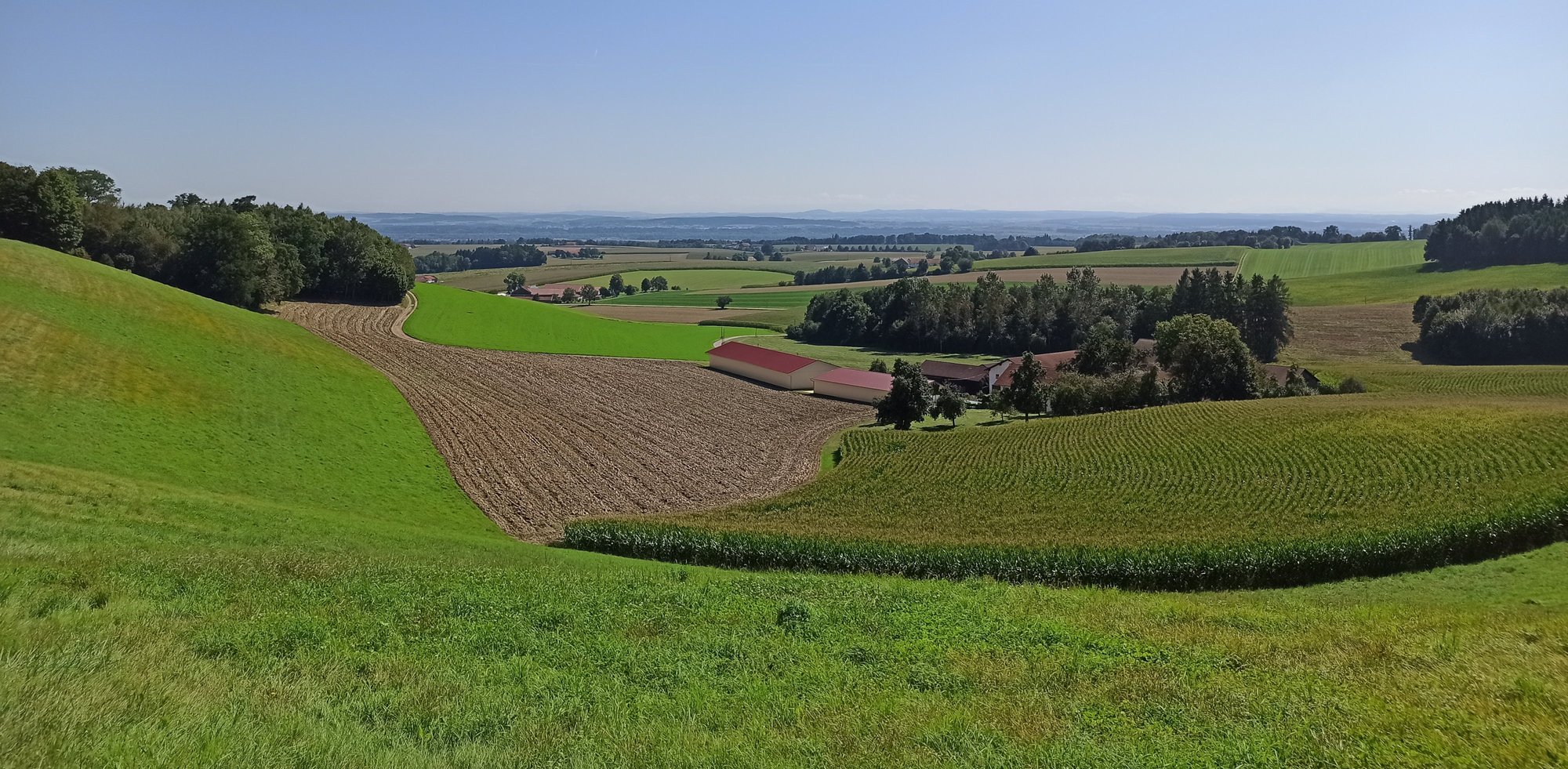
Its main gateway is the Santiago–Tuguegarao Road which is a part of the national highway. The Ilagan–Delfin Albano–Mallig Road, a provincial road, also serves as an important point of entry to Mallig. It is also an agricultural town mainly composed of agricultural farms such as rice fields and corn fields which makes its rural landscape.
Mallig is situated 37.33 kilometres (23.20 mi) from the provincial capital Ilagan, and 425.19 kilometres (264.20 mi) from the country's capital city of Manila.
Barangays
Mallig is politically subdivided into 18 barangays. Each barangay consists of puroks while some have sitios.
Climate
The climate in Mallig is tropical. Mallig has significant rainfall most months, with a short dry season. This location is classified as Am by Köppen and Geiger. The temperature here averages 27.0 °C. The average annual rainfall is 1784 mm.
Demographics
In the 2020 census, the population of Mallig, Isabela, was 32,208 people, with a density of 240 inhabitants per square kilometre or 620 inhabitants per square mile.
Economy
Poverty incidence of Mallig
Mallig is considered as one of the largest exporters of rice, corn, and tobacco in the Mallig Plains Region.
Major industries
Mallig is one of the top producers of agricultural products in the province. Its principal crops is mainly rice but corn and tobacco are produced in quantity. The municipality is often referred to as the "rice and nateng capital of the province." Other major crops are mango, calamansi (calamondin orange), banana, peanut, and vegetables.
Government
Local government
As a municipality in the Province of Isabela, government officials at the provincial and municipal levels are voted by the town. The provincial government has political jurisdiction over most local transactions of the municipal government.
The Municipality of Mallig is governed by a mayor, designated as its Local Chief Executive, and by a municipal council as its legislative body in accordance with the Local Government Code. The mayor, vice mayor, and the municipal councilors are elected directly by the people in elections held every three years.
Barangays are also headed by elected officials: Barangay Captain, Barangay Council, whose members are called Barangay Councilors. The barangays have SK federation which represents the barangay, headed by SK chairperson and whose members are called SK councilors. All officials are also elected every three years.
Elected officials
Congress representation
Mallig, belonging to the fifth legislative district of the province of Isabela, currently represented by Hon. Faustino Michael Carlos T. Dy III.
Education
The Schools Division of Isabela governs the town's public education system. The division office is a field office of the DepEd in Cagayan Valley. The office governs the public and private elementary and public and private high schools throughout the municipality.
- Schools and Colleges
- Mallig Plains Colleges
- Mallig National High School
- Mallig Plains National High School
- San Jose National High School
References
External links
- Municipal Profile at the National Competitiveness Council of the Philippines
- Mallig at the Isabela Government Website
- Local Governance Performance Management System
- Philippine Standard Geographic Code
- Philippine Census Information
- Municipality of Mallig